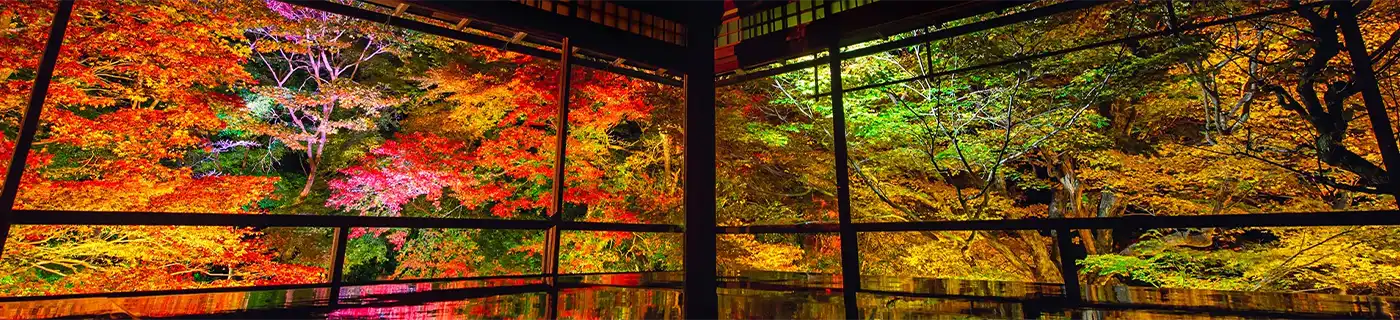
Kyoto boasts numerous traditional events and special occasions that color each of the four seasons. From the vibrancy of spring to the tranquility of winter, each visit to Kyoto reveals a new and captivating charm. Enjoy seasonal, special experiences to your heart's content, using our hotel as your base.
When you think of Kyoto in spring, you think of Kamogawa River. I recommend taking a leisurely stroll under the tunnel of cherry blossoms while listening to the gentle murmur of the river.
Event period
Late March to early April
Main venues and spots
Along Kamogawa River (around Gojo Bridge, etc.)
Access from the hotel
Our hotel is approximately a 3-minute walk from Kamogawa River and Shijo Ohashi Bridge area.
Our hotel is approximately a 5-minute walk from Kamogawa River and the area around Gojo Bridge.
Nighttime cherry blossom illumination at Gion Shirakawa
Enjoy a night stroll filled with the unique charm of Kyoto, where cobblestone streets, traditional townhouses, and the enchantingly illuminated cherry blossoms come together in a beautiful spectacle.
Event period
Late March to early April (the exact dates vary each year)
Main venues and spots
Gion Shirakawa area
Access from the hotel
It's about a 5-minute walk from our hotel.
Take the Keihan Kiyomizu-Gojo train to Gion-Shijo station. Walk to Gion-Shirakawa. The estimated time is about 16 minutes.
Toji Temple's Special Nighttime Opening and Light-Up
The five-story pagoda of Toji Temple, a World Heritage Site, and the beautifully blooming Fuji cherry blossoms are illuminated at night. This breathtaking, fantastical nighttime scenery, with its overwhelming scale, is a must-see.
Event period
Mid-March to mid-April (The duration and content vary from year to year)
Main venues and spots
Toji Temple
Access from the hotel
It's about a 30-35 minute bus ride from our hotel.
It's about a 25-30 minute bus ride from our hotel.
Spring Odori Dance Performances in Kyoto’s Geisha Districts
In Kyoto's various geisha districts, such as "Miyako Odori" and "Kamogawa River Odori," dazzling dance performances are held by geiko and maiko. These are beautiful and dignified events that adorn Kyoto in the spring.
Event period
Late March to late May (varies depending on the geisha district and performance)
Main venues and spots
Theaters in various geisha districts such as Gion Kobu and Pontocho
Access from the hotel
Varies depending on the venue. You can access the Gion and Pontocho areas using various public transportation options.
Varies depending on the venue. You can access the Gion and Pontocho areas using various public transportation options.
Spring flowers (wisteria and azalea) at Jonangu Shrine and the Kyokusui no En (winding stream banquet).
Jōnan-Jonangu Shrine, a renowned shrine in southern Kyoto, is a famous scenic spot also known as the "Garden of Flowers from The Tale of Genji." As spring deepens, wisteria and azaleas vividly color the garden. The "Kyokusui no En" (winding stream banquet), which recreates the customs of Heian-period aristocrats, is also well-known.
Event period
Late April to early May (the Kyokusui-no-En banquet is on April 29th)
Main venues and spots
Jonangu Shrine
Access from the hotel
Keihan Gion-Shijo Station → Tambabashi Station → Kintetsu Tambabashi Station → Takeda Station → towards Jonangu Shrine. Estimated travel time: approximately 40-50 minutes.
Gojo Subway Station → Takeda Station → Towards Jonangu Shrine. Approximately 40-50 minutes.
A tour of fresh green leaves and young maple leaves
After the cherry blossom season ends, Kyoto enters the season of fresh, vibrant green maple leaves. The beauty of the young leaves, translucent in the early summer sunlight, is no less than that of the autumn leaves, and many temples and shrines throughout the city are enveloped in refreshing green.
Event period
Late April to late May
Main venues and spots
Tofuku-ji Temple, Nanzen-ji Temple, Rurikoin Temple, etc.
Access from the hotel
Access varies depending on the temple or shrine. You can access various locations using public transportation such as trains and city buses.
A tour of the fresh greenery along Sagano Romantic Train
This popular sightseeing train slowly travels along the Hozugawa Gorge. The refreshing feeling of speeding through a tunnel of lush greenery while enjoying a pleasant breeze is an experience unique to this time of year.
Event period
Late April to late May
Main venues and spots
Sagano Romantic Train and Hozugawa Gorge
Access from the hotel
Take the subway from Sanjo Keihan Station to Nijo Station, then transfer to the JR Saga-Arashiyama Station, and finally take the Torokko Saga Station. The journey takes approximately 30-40 minutes.
From our hotel, take the city bus from JR Tambaguchi Station to JR Saga-Arashiyama Station, then to Torokko Saga Station. The journey takes approximately 45 to 55 minutes.
Aoi Festival
One of Kyoto's three major festivals, a procession of approximately 500 people dressed in the elegant costumes of Heian-era aristocrats slowly makes its way through the lush green streets of the city. This graceful historical spectacle is a must-see.
Event period
Every year on May 15th (may be postponed in case of rain)
The Kyoto Imperial Palace, the starting point of the procession, is approximately 30 to 40 minutes away from our hotel by city bus.
The Kyoto Imperial Palace, the starting point of the procession, is approximately 30 to 40 minutes away from our hotel by city bus.
Summer (June to August)
A tour of hydrangeas in southern Kyoto (including Mimuroto-ji Temple and Fujimori Shrine)
During the rainy season, vibrant hydrangeas come into full bloom in southern Kyoto. At Mimuroto-ji Temple in Uji, famous as the "Hydrangea Temple," thousands of hydrangea plants adorn the temple grounds, creating an elegant and soothing scene that shines when wet with rain.
Event period
Early June to early July
Main venues and spots
Mimuroto-ji Temple, Fujimori Shrine, etc.
Access from the hotel
To get to Mimuroto-ji Temple, take the Keihan Line from Gion-Shijo Station to Chushojima Station, then to Mimuroto Station, and walk. The estimated time is 50 to 60 minutes.
To get to Mimuroto-ji Temple, take the Keihan Line Kiyomizu-Gojo Station to Chushojima Station, then to Mimuroto Station, and walk. The estimated time is 60 to 70 minutes.
Nagoshi no Harae & Chinowa Ring Purification
This traditional Shinto ritual cleanses oneself of sins and impurities accumulated over the past six months and prays for good health and protection from illness for the remaining half of the year. Large "kaya no wa" (a ring made of reeds) are set up at shrines throughout the city, including Kamigamo Shrine, and people pass through them in a figure-eight pattern to purify their minds and bodies. It is a quintessential early summer scene in Kyoto.
Event period
Around June 30th, and generally from June to early July (this varies depending on the shrine).
Main venues and spots
Kamigamo Shrine and other shrines in Kyoto City
Access from the hotel
It varies depending on the shrine. Kamigamo Shrine is about 50-60 minutes away from our hotel by city bus.
Gion Festival (Yoiyama and Yamahoko Procession)
Held over a month, it is one of Japan's three major festivals. The magnificent floats line the streets during the Yoiyama (evening festival) accompanied by the sounds of the Gion Hayashi music, and the procession of the floats slowly making its way through the main streets of Kyoto are breathtaking sights that are an essential part of summer in Kyoto.
Event period
July 1st to 31st (The dates for the Yoiyama and Yamahoko procession differ for the pre-festival and post-festival events.)
Main venues and spots
Shijo Karasuma and the surrounding Yamahoko districts, etc.
Access from the hotel
It's about a 5-minute walk to the Shijo Kawaramachi intersection on the Yamahoko procession route. The time required may vary depending on the venue and traffic restrictions.
It takes approximately 12 minutes to walk to Shijo Street (Shijo Gokomachi) on the Yamahoko procession route. The time required may vary depending on the venue and traffic restrictions.
Shimogamo Shrine Mitarashi Festival
This Shinto ritual takes place around the Day of the Ox during the summer. Participants immerse themselves up to their knees in the cold spring water of the Mitarai Pond, praying for good health and protection from illness. With activities such as floating footprint-shaped prayer slips in the water for fortune-telling, it's a refreshing festival that helps you forget the harsh summer heat.
Event period
Late July
Main venues and spots
Shimogamo Shrine
Access from the hotel
Keihan Gion-Shijo Station → Demachiyanagi Station → Walk. Approximately 20-25 minutes.
It's about a 25-30 minute bus ride from our hotel.
Tanabata bamboo decorations at Kifune Shrine
Kibune, often called the "inner sanctuary" of Kyoto, is a popular summer retreat, offering a cooler escape from the city. During the summer months, the temple grounds are adorned with colorful Tanabata bamboo decorations, allowing visitors to enjoy a refreshing time surrounded by pure water and lush greenery.
Event period
Around July to August (the exact dates vary from year to year)
Main venues and spots
Kifune Shrine
Access from the hotel
Keihan Gion-Shijo Station → Eizan Electric Railway Demachiyanagi Station → Kibuneguchi Station → Kyoto Bus. Approximately 70-80 minutes to Kibune Shrine.
From our hotel, take a city bus to Demachiyanagi Station on the Eizan Electric Railway, then to Kibuneguchi Station, and finally take a Kyoto Bus. The journey to Kibune Shrine takes approximately 80-90 minutes.
Kamogawa River Riverside Terraces
A row of wooden platforms called "yuka" are set up along the west bank of Kamogawa River. Enjoy a meal while listening to the gentle murmur of the river and feeling the cool night breeze—a luxurious summer evening experience unique to Kyoto.
Event period
May to September
Main venues and spots
Riverside terrace area on the west bank of Kamogawa River
Access from the hotel
Our hotel is approximately a 3-minute walk from Kamogawa River and Shijo Ohashi Bridge area.
Our hotel is approximately a 5-minute walk from Kamogawa River and the area around Gojo Bridge.
Cormorant fishing on the Uji River
On summer nights, cormorant fishermen skillfully control cormorants from boats illuminated by bonfires—a traditional fishing method. The breathtaking sight viewed up close from a pleasure boat creates a special, elegant summer memory that has continued since the Heian period.
Event period
Early July to late September (dates vary each year)
Main venues and spots
Uji River
Access from the hotel
Keihan Gion-Shijo Station → Chushojima Station → Uji Station → Walk. Estimated time: 45-55 minutes.
Keihan Kiyomizu-Gojo Station → Chushojima Station → Uji Station → Walk. Estimated time: 55-65 minutes.
Gozan Okuribi (Five Mountain Bonfire Festival)
This traditional event involves lighting up the night sky with flames to form characters such as "大" (dai, meaning "great") to send off the spirits of the deceased during the Obon festival. With the city lights dimmed, the blazing farewell fires in the silence create a mystical beauty that evokes the feeling of summer passing by.
Event period
Every year on August 16th
Main venues and spots
Various mountains within Kyoto City (Daimonji, Myoho, Funagata, Hidari Daimonji, Torii-gata)
Access from the hotel
The details vary depending on the bonfire you choose to view. Please check the viewing location and traffic restrictions in advance.
Autumn (September to November)
Jidai Festival
One of Kyoto's three major festivals, this magnificent parade, resembling a living historical scroll, features a procession of approximately 2,000 people dressed in the splendid costumes of various eras, from the Meiji Restoration to the Heian period, parading through the streets of Kyoto.
Event period
Every year on October 22nd
Main venues and spots
Kyoto Imperial Palace to Heian Jingu Shrine
Access from the hotel
The Kyoto Imperial Palace, the starting point of the procession, is approximately 30 to 40 minutes away from our hotel by city bus.
The Kyoto Imperial Palace, the starting point of the procession, is approximately 30 to 40 minutes away from our hotel by city bus.
Special nighttime viewings and autumn foliage illuminations at temples and shrines in autumn
A major event in Kyoto that adds color to the long autumn nights. From the special nighttime viewing at Kiyomizu-dera Temple to the vibrant autumn leaves that glow in the dark at various famous spots, this is a special period where you can experience a mystical world completely different from that of the daytime.
Event period
November to early December
Main venues and spots
Kiyomizu-dera Temple-dera Temple, Eikan-do Temple, Kodai-ji Temple, Chion-in, etc.
Access from the hotel
Access varies depending on the temple or shrine. You can access various locations using public transportation such as trains and city buses.
Higashi Honganji Temple's traditional autumn event "Hoonko" and the ginkgo tree-lined street
The Hoonko, the most important Buddhist service of the Jodo Shinshu sect, is a lively autumn event that attracts many worshippers from all over the country. At the same time, the ginkgo trees lining the street in front of the temple gate turn golden, offering a magnificent view unique to autumn.
Event period
November 21st to 28th (Hoon-ko)
Main venues and spots
Higashi Honganji Temple
Access from the hotel
It's about a 20-25 minute bus ride from our hotel.
It's about a 15-minute bus ride from our hotel.
Rurikoin Temple Autumn Special Viewing and Autumn Leaves
Rurikoin Temple is known for its "Lapis Lazuli Garden" viewed from the study hall and the fantastical reflection of autumn leaves on the desk. This special viewing allows you to enjoy the beautiful scenery unique to Kyoto in autumn, with its moss-covered garden and vibrantly colored trees.
Event period
October to December (the special viewing period varies from year to year)
Main venues and spots
Rurikoin Temple
Access from the hotel
Keihan Gion-Shijo Station → Eizan Electric Railway Demachiyanagi Station → Yase-Hieizanguchi Station → Walk. Approximately 40-50 minutes.
From our hotel, take a city bus to Eizan Electric Railway Demachiyanagi Station, then to Yase-Hieizanguchi Station, and walk. The estimated time is about 50-60 minutes.
Autumn foliage viewing at Tofuku-ji Temple
Tofuku-ji Temple, one of Kyoto's premier spots for viewing autumn foliage, is holding a special limited-time viewing event in the fall. The sea of fiery autumn leaves viewed from the Tsutenkyo Bridge spanning the valley is an overwhelming visual experience that can only be enjoyed at this time of year.
Event period
Mid-November to early December
Main venues and spots
Tofuku-ji Temple
Access from the hotel
Keihan Gion-Shijo Station → Tofukuji Station → Walk. Approximately 15-20 minutes.
Keihan Kiyomizu-Gojo Station → Tofukuji Station → Walk. Approximately 15-20 minutes.
At Eikan-do Temple, a famous spot known as "Eikan-do of the Maple Trees," an exhibition of temple treasures, usually not open to the public, is held to coincide with the autumn foliage season. Combined with the magnificent view from the Sanmon Gate of the adjacent Nanzen-ji Temple, this event allows visitors to enjoy both the arts of autumn and the beauty of nature at the same time.
Event period
Early November to early December
Main venues and spots
Eikan-do Temple
Access from the hotel
Approximately 25-35 minutes by city bus from our hotel.
Approximately 30-35 minutes by city bus from our hotel.
Autumn foliage viewing from Sagano Romantic Train
This popular sightseeing train runs through the Arashiyama-Hozugawa Gorge, where the entire mountain is ablaze with autumn colors. In addition to the exhilarating experience of passing through a tunnel of autumn leaves while feeling the pleasant breeze during the day, the "Fantasy of Light Train" also operates after dusk, when the area along the line is illuminated with lights and illuminations.
Event period
The best time to see the autumn leaves is from mid- to late November (the Illumination Fantasy Train runs from late October to late December).
Main venues and spots
Sagano Romantic Train and Hozugawa Gorge
Access from the hotel
Take the subway from Sanjo Keihan Station to Nijo Station, then transfer to the JR Saga-Arashiyama Station, and finally take the Torokko Saga Station. The journey takes approximately 30-40 minutes.
From our hotel, take the city bus from JR Tambaguchi Station to Saga-Arashiyama Station, then to Torokko Saga Station. The journey takes approximately 45 to 55 minutes.
Winter (December to February)
The New Year's Eve bells of Kyoto
The ringing of temple bells on New Year's Eve marks the end of the year. In Kyoto, the sound of bells can be heard from numerous temples throughout the city. Whether or not general public participation is allowed and whether or not numbered tickets are issued varies from temple to temple.
Event period
Late night of December 31st to January 1st
Main venues and spots
Chion-in, Kodai-ji Temple, and other temples in Kyoto City
Access from the hotel
Access varies by temple. You can access various locations using public transportation such as trains and city buses.
New Year's visits to shrines in Kyoto (Yasaka Shrine, Heian Jingu Shrine, Fushimi Inari Taisha Shrine, etc.)
Hatsumode, the first shrine visit of the new year, is a time to celebrate the start of the new year. Enjoy a peaceful time in the refreshing atmosphere of the temple grounds, offering prayers for peace and good health throughout the year. Please check the latest information for your intended temple or shrine, as crowd levels, visiting hours, and traffic restrictions vary depending on the location.
Event period
early January
Main venues and spots
Yasaka Shrine, Heian Jingu Shrine, Fushimi Inari Taisha Shrine, etc.
Access from the hotel
It varies depending on the temple or shrine. Yasaka Shrine is about an 8-minute walk away.
Access varies depending on the temple or shrine. You can access various locations using public transportation such as trains and city buses.
Special winter opening of cultural properties (including the Hiyunkaku Pavilion at Nishi Honganji Temple)
The "Special Public Opening of Normally Closed Cultural Properties" is held in Kyoto during the winter. At Nishi Honganji Temple, famous buildings such as the national treasure "Hiyunkaku" are sometimes opened to the public, making it a winter event that satisfies intellectual curiosity.
Event period
January to March (The viewing period varies depending on the year and the temple/shrine)
Main venues and spots
Nishi Honganji Temple and other temples and shrines
Access from the hotel
It varies depending on the temple or shrine. Nishi Honganji Temple is about a 30-minute bus ride away.
It varies depending on the temple or shrine. Nishi Honganji Temple is about a 20-minute bus ride away by Keihan Bus.
Kyoto's Setsubun Festival (Heian Jingu Shrine, etc.)
This is an exorcism ritual held the day before the beginning of spring. Various events are held at temples and shrines in Kyoto. At the Setsubun Festival of Heian Jingu Shrine, you can see impressive Shinto rituals such as the "Daina-no-gi" and "Oni no Mai" (demon dance), which recreate court ceremonies from the Heian period.
Event period
Around February 2nd-3rd
Main venues and spots
Heian Jingu Shrine and other temples and shrines in Kyoto City
Access from the hotel
It varies depending on the temple or shrine. Heian Jingu Shrine is about 15 to 25 minutes away by city bus.
It varies depending on the temple or shrine. Heian Jingu Shrine is about 25-30 minutes away by city bus.
A miraculous and breathtaking sight that can only be encountered on a snowy winter morning. From Kifune Shrine with its red lanterns covered in snow to the Arashiyama bamboo forest bathed in a silvery-white haze, this is a special experience exploring winter Kyoto, as beautiful as a sumi-e (ink painting).
Event period
January to February (only when there is snow)
Main venues and spots
Kifune Shrine, Arashiyama, etc.
Access from the hotel
To get to Kifune Shrine, take the Keihan Railway from Gion-Shijo Station to Demachiyanagi Station on the Eizan Electric Railway, then to Kifuneguchi Station, and finally take a Kyoto Bus. The journey to Kifune Shrine takes approximately 70-80 minutes.
To get to Kifune Shrine, take a city bus, then the Eizan Electric Railway to Demachiyanagi Station, then to Kifuneguchi Station, and finally take a Kyoto Bus. The journey to Kifune Shrine takes approximately 80-90 minutes.
Kitano Tenmangu Shrine's Plum Garden Opens to the Public
At Kitano Tenmangu Shrine, which enshrines Sugawara no Michizane, the god of learning, the "Plum Garden," where approximately 1,500 plum trees of about 50 varieties bloom, will be specially opened to the public. The sweet fragrance that gently drifts on the still-chilly breeze is a quintessential sign of early spring's arrival in Kyoto.
Event period
Mid-February to late March
Main venues and spots
Kitano Tenmangu Shrine
Access from the hotel
It's about a 40-50 minute bus ride from our hotel.
It's about a 40-50 minute bus ride from our hotel.
*The information displayed may be subject to change. Please check the official websites of each event and facility for the latest information on event dates and best viewing times.
Time Design will guide you through accommodation plans that include Shinkansen. For inquiries regarding accommodation + Shinkansen, changes to reservations, or cancellations, please contact Time Design Co., Ltd. Time Design Inc. TEL. 0570-039866 (Business hours: Monday to Friday 10:00-17:00 *Closed on Saturdays, Sundays and public holidays)